Research suggests that between half and three quarters of women with MS will experience sexual problems at some point in their lives.
Here we explore why people with MS experience sexual difficulties, the most common problems experienced by women and what can be done to help with these problems.
Sexual difficulties are common in women with MS. Not all sexual problems will be as a direct result of multiple sclerosis and often result from a complex interaction of physical, social, psychological and emotional elements.
You may find it awkward or embarrassing to talk about sex, but there is support available. The key element in managing sexual issues is the willingness to discuss problems.
Sexual difficulties reported by women include:
For many people, sexual problems are caused by a combination of physical, psychological, emotional and social factors. These problems fall into three broad groups arising:
- directly due to MS damage to nerve pathways in your brain and spinal cord that control sexual feelings and responses
- indirectly due to other symptoms of MS, such as bladder symptoms, fatigue, low mood and depression or spasticity, or from prescribed medications
- from the wider consequences of living with MS; this can undermine your sense of self, sexual identity and enjoyment, and your confidence as a sexual partner or potential partner.
Emotional reactions can be an issue for both you with MS and your partner, and relationship difficulties are commonly reported. It's also important to remember that many women without MS will experience some of these issues such as loss of desire and vaginal dryness. These are common problems in the general population and can be due to a number of causes unrelated to MS such as aging, menopause, alcohol or drug use, or other health related conditions.
Sexual difficulties are not unusual. Studies estimate that from half to three quarters of women with MS will be affected by sexual problems to some degree at some time. Some difficulties may be long lasting or permanent whilst others may come and go. Although sexual concerns are more likely the longer someone has had MS, they can occur at any time.
A study of 150 sexually active women in Italy found that sexual problems affected 16% of women without MS, and 42% of women with MS.
The most important starting point for managing sexual issues is being willing to talk about them. Many people find it difficult to talk about sexual problems with their partner or close friends, let alone a GP or their MS nurse. But remember that sexual problems can be symptoms of MS and deserve to be taken seriously and there are approaches to manage the effects.
Many healthcare professionals, such as your MS nurse, GP, district or practice nurse or continence advisor, are used to talking about such matters on a regular basis. If you are not receiving adequate support, ask to be referred to somebody with more experience in this area. Don't give up; help is out there, but you may need to be persistent.
Some people find that rather than focusing on intercourse and the pursuit of an orgasm, it can be more fulfilling and rewarding to re-establish intimacy. Intimacy is more than just having sex. Holding hands, cuddling, stroking and kissing - where the focus is on touch and sensuality - are important elements of any relationship, particularly if full sexual intimacy is difficult. Confiding in each other, spending time together and simply being there for each other are also vital.
Taking the focus away from sex itself is an approach sometimes used by sex therapsists. It can help you reassess what's important in your relationship. You can also consider your erotic and sexual likes and dislikes without the pressure to try and act them out straight away.
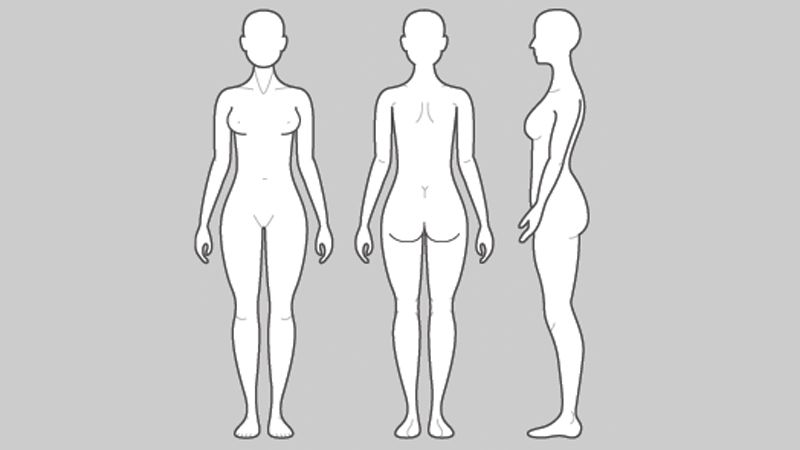
A technique that can help you and your partner understand your sexual likes and dislikes (and what your body is still capable of) that is often suggested by sex therapists is body mapping.
Body mapping (or sensate focusing) is a simple technique that you can use on your own or with a partner to increase intimacy and rediscover sexual pleasure. It involves exploring your body to find out exactly where touch gives you pleasure or where it feels uncomfortable. If you decide to give body mapping a try it's best to find somewhere you feel comfortable and where you won't be disturbed for at least 15-20 minutes. Then take off your clothes and lie down.
1. It can be useful to draw a basic map of your body. You could print out the image below or draw your own. You might want to carry out this exercise more than once as your preferences might change at different times of the month, or if symptoms change. Areas that were initially pleasurable may be too sensitive at other times.
2. Take time to touch different areas of your body, or get your partner to do this, from head to toe (or all the areas you can reach). Think about how it feels to be touched in each place. Does it give you pleasure, or does it cause you discomfort or sensory change?
3. Make notes on the map to describe what you feel, you could give different areas a score perhaps from 1-5 (very pleasurable, pleasurable, no sensation, uncomfortable, very uncomfortable) or create a colour code - for example red for areas which are a definite no go, yellow for when it depends on the situation or how you're feeling and green for areas that give you pleasure or arouse you.
For each area think about the following.
- What level of pressure feels best? In some areas it might be a light touch whereas others may need a firmer degree of pressure.
- What motion feels most pleasant - being stroked in the same direction, up and down, or a circular motion?
- The speed or rhythm you prefer - you might prefer a slower or lighter touch intially that becomes faster or more intense as you become aroused.
- What do you like to be touched with? Fingers, other body parts, feathers, silk, a soft brush, leather or vibrating toys are all things you could explore using.
- Explore different temperatures - perhaps you might like the cold sensation of an ice cube being rubbed over your body, or a tingling or warming massage lube.
Remember the aim of the exercise isn't to orgasm, in fact it's usually recommended that you don't attempt this initially as it can defeat the purpose of the exercise.
As you become more confident about your likes and dislikes you may find you no longer need the maps. However, they can be a good reminder of how your preferences change depending on where you are emotionally, where you are in your sexual response - be that unaroused>excited>orgasm>post-orgasm, any medication you've taken or when symptoms change.


