

9 February 2015
How common are problems with swallowing in people with MS?
A review of studies into swallowing problems in multiple sclerosis finds they are common but estimates vary.
Difficulty swallowing (also known as dysphagia) is a possible symptom of multiple sclerosis. Support is available to help manage the effects of swallowing problems.
MS may affect swallowing in a number of ways:
These can all affect the safety of your eating and drinking but also your enjoyment of mealtimes.
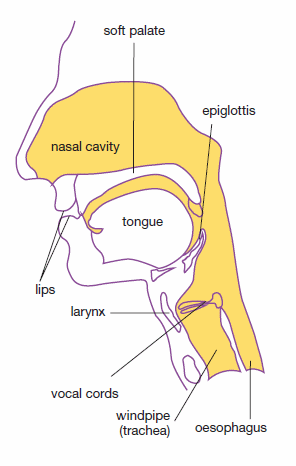
Chewing and swallowing involves the coordination of a number of muscles in the mouth and throat, including those which protect your windpipe when food and drink pass through your throat. Muscles can be weakened or the coordination of their movements disrupted by damage to the central nervous system caused by MS. This can also affect the way you sense the presence of food and drink in your mouth and throat.

In this video, speech and language therapist Suzanne Buckley answers your questions on swallowing problems in MS, from what causes them to practical tips on how they can be managed.
Studies have found that around a third of people with MS experience swallowing difficulties to some degree. More significant symptoms are more likely if you have more advanced MS. However, mild or occasional difficulties can be present early on in MS and can also occur during relapses.
If you are prone to choking whilst eating, try to eat whilst there is someone with you who knows how to help you. The NHS Choices website has information on what to do if someone is choking.
A speech and language therapist can assess how your swallowing is affected. The therapist can advise on posture, consistencies of food and drinks, eating environment and possible exercises to strengthen muscles involved in swallowing. They may work with their physiotherapy colleagues to help you achieve the posture which makes swallowing easiest. They will work with their colleagues in the dietitian team to advise you on ways of maintaining your calorie intake or the need to alter food and drink consistencies.
If your swallowing problems are more advanced and eating or drinking is putting you at risk of malnutrition, dehydrating, choking or severe chest infections, there are other options for providing your nutrition which your medical and therapy team can explore with you. One of these is a procedure called percutaneous endoscopic gastrostomy (PEG).

